PROGRAMME OUTCOMES:
On successful completion of the programme, the graduates will be able to:
PO1: Foundational Knowledge of Radiologic Sciences: Graduates will demonstrate a strong foundation in human anatomy, physiology, pathology, and medical physics, relevant to diagnostic imaging and therapeutic radiology.
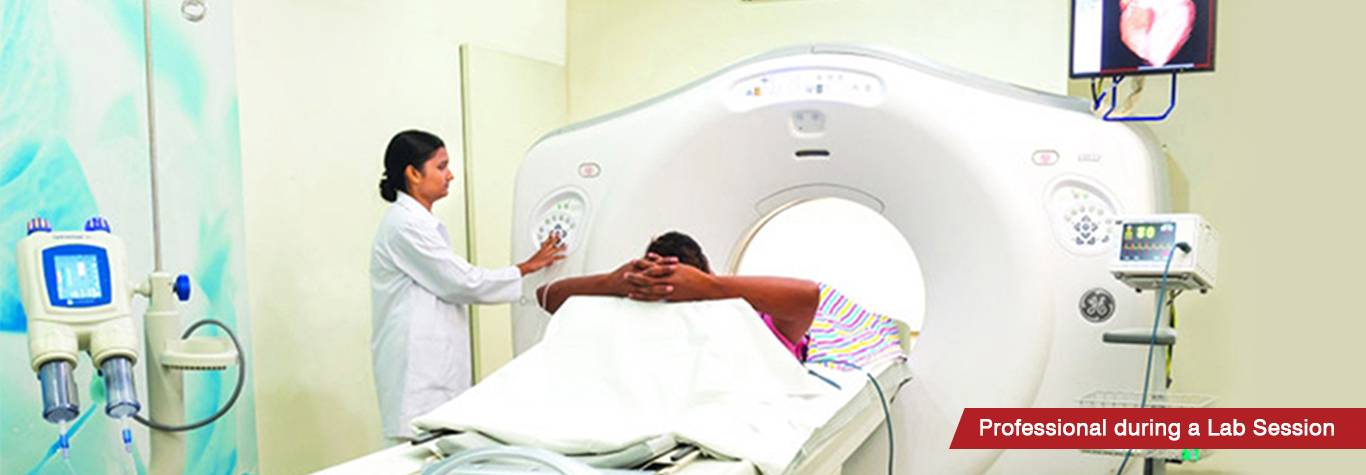
PO2: Proficiency in Imaging Modalities: Graduates will be competent in operating various imaging technologies including X-ray, CT, MRI, Ultrasonography, Mammography, and Nuclear Medicine.
PO3: Patient Care and Safety: Graduates will be able to provide quality patient care by ensuring comfort, dignity, and safety, including accurate positioning and radiation protection.
PO4: Radiation Safety and Protection: Demonstrate knowledge and implementation of radiation protection principles for patients, staff, and self in accordance with regulatory guidelines (e.g., AERB, ICRP).
PO5: Quality Control and Assurance: Understand and apply quality control and quality assurance measures to ensure optimal imaging performance and diagnostic accuracy.
PO6: Individual and team work: Function effectively on multidisciplinary teams.
PO7: Communication: Graduates will be able to communicate effectively.
PO8: Project management and finance: Demonstrate knowledge and understanding of the engineering and management principles and apply these tone’s own work, as a member and leader in a team, to manage projects and in multidisciplinary environments
PO9: Life-long learning: Adopt technological changes and promote life-long learning.
PO10: Research and Lifelong Learning: Develop a mind-set for critical thinking, evidence-based practice, and engagement in research and lifelong learning to stay updated with evolving technologies.
PO11: Information Technology and Documentation: Use information systems, PACS, HIS, and RIS for proper documentation, image archiving, and reporting workflows.
PO12: Career Readiness and Higher Education: Prepare for employment in hospitals, diagnostic centers, or academic institutions, and pursue higher education or specialization in radiologic sciences.
PROGRAMME SPECIFIC OUTCOMES:
PSO1: Graduates will be proficient in performing diagnostic imaging procedures such as X-ray, CT, MRI, and Ultrasound with accuracy, safety, and adherence to radiation protection protocols
PSO2: Students will demonstrate the ability to operate and maintain imaging equipment efficiently, understanding the physics and technological principles behind each modality.
PSO3: Graduates will be able to assess image quality, recognize anatomical structures and pathological findings, and assist radiologists in diagnosis by ensuring optimal imaging outcomes.
PSO4: Students will exhibit strong ethical standards, effective communication skills, and a commitment to patient care and inter-professional collaboration in clinical settings
PROGRAMME SPECIFIC OUTCOMES:
PSO1: Graduates will be proficient in performing diagnostic imaging procedures such as X-ray, CT, MRI, and Ultrasound with accuracy, safety, and adherence to radiation protection protocols
PSO2: Students will demonstrate the ability to operate and maintain imaging equipment efficiently, understanding the physics and technological principles behind each modality.
PSO3: Graduates will be able to assess image quality, recognize anatomical structures and pathological findings, and assist radiologists in diagnosis by ensuring optimal imaging outcomes.
PSO4: Students will exhibit strong ethical standards, effective communication skills, and a commitment to patient care and inter-professional collaboration in clinical settings.