logo
Admissions Open for 2026-27 : Join Lateral Entry Courses in B.Pharm, B.Tech, BPT, B.OPTOM, BMLT, BMRIT, BOTAT, BCCT, NUTRITION, MARINE ENGG. Courses.  For Admission and Enquiry, Contact: 704444 6888 / 704444 6999

B.Sc. (Hons.) Agriculture

banner

Apply Now

    I agree to receive information regarding my submitted enquiry at The Neotia University.

    B.Sc. (Hons.) Agriculture

    TOTAL SEATS=120


    Agriculture, with its allied sectors, is undeniably the largest livelihood provider in India, more so in the vast rural areas. It also contributes a significant figure to the Gross Domestic Product (GDP). Sustainable agriculture, in terms of food security, rural employment, and environmentally sustainable technologies such as soil conservation, sustainable natural resource management, and biodiversity protection, are essential for holistic rural development. Indian agriculture and allied activities have contributed to green revolution, white revolution, yellow revolution, and a blue revolution.

    Agriculture with its allied fields such as animal husbandry, fishery provides lucrative job opportunities along with food security of the nation. Agriculture along with horticulture, floriculture, animal husbandry, fisheries, and dairy technology provides a strategic framework for innovation-led inclusive agricultural growth in the country.

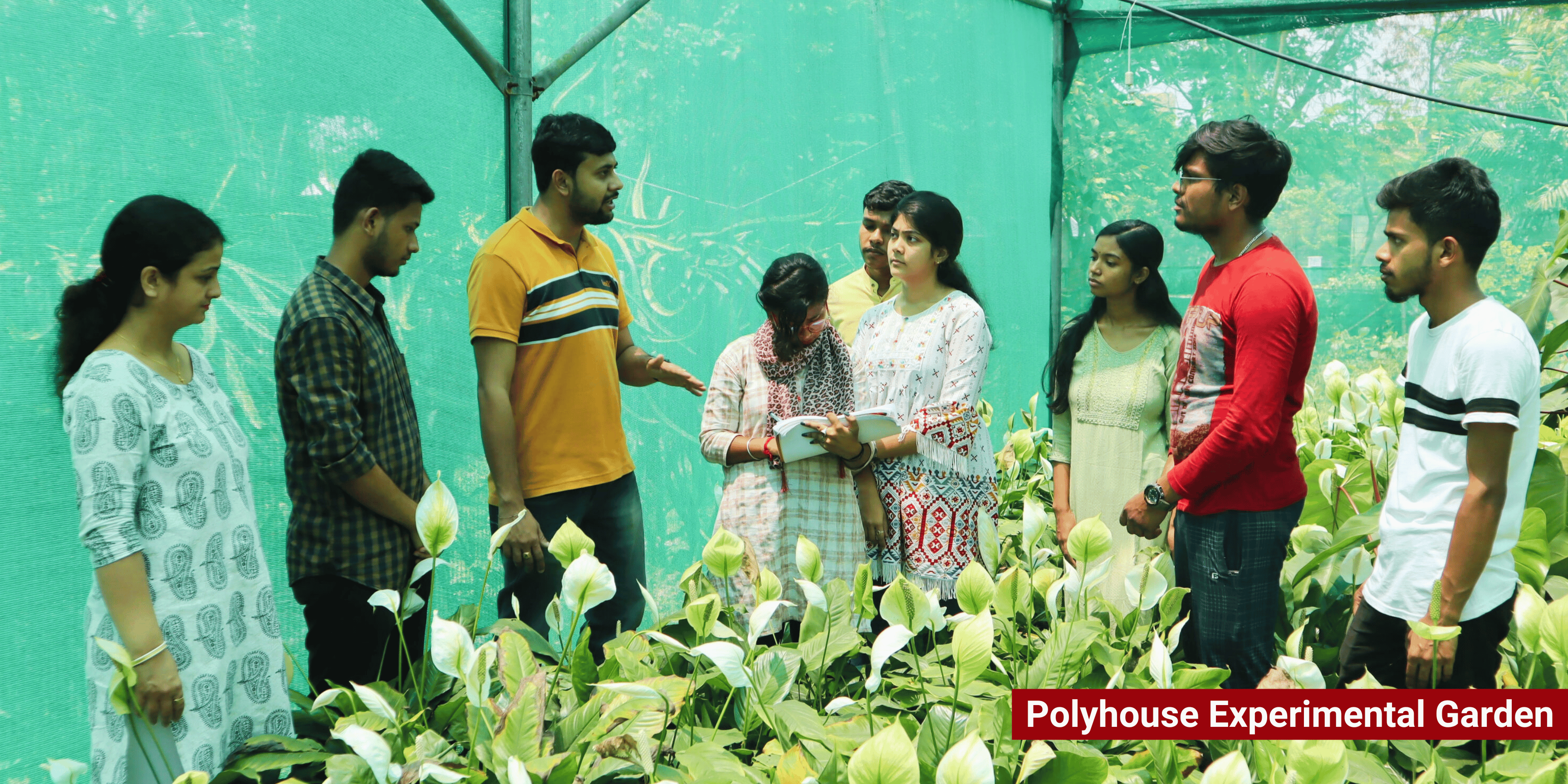
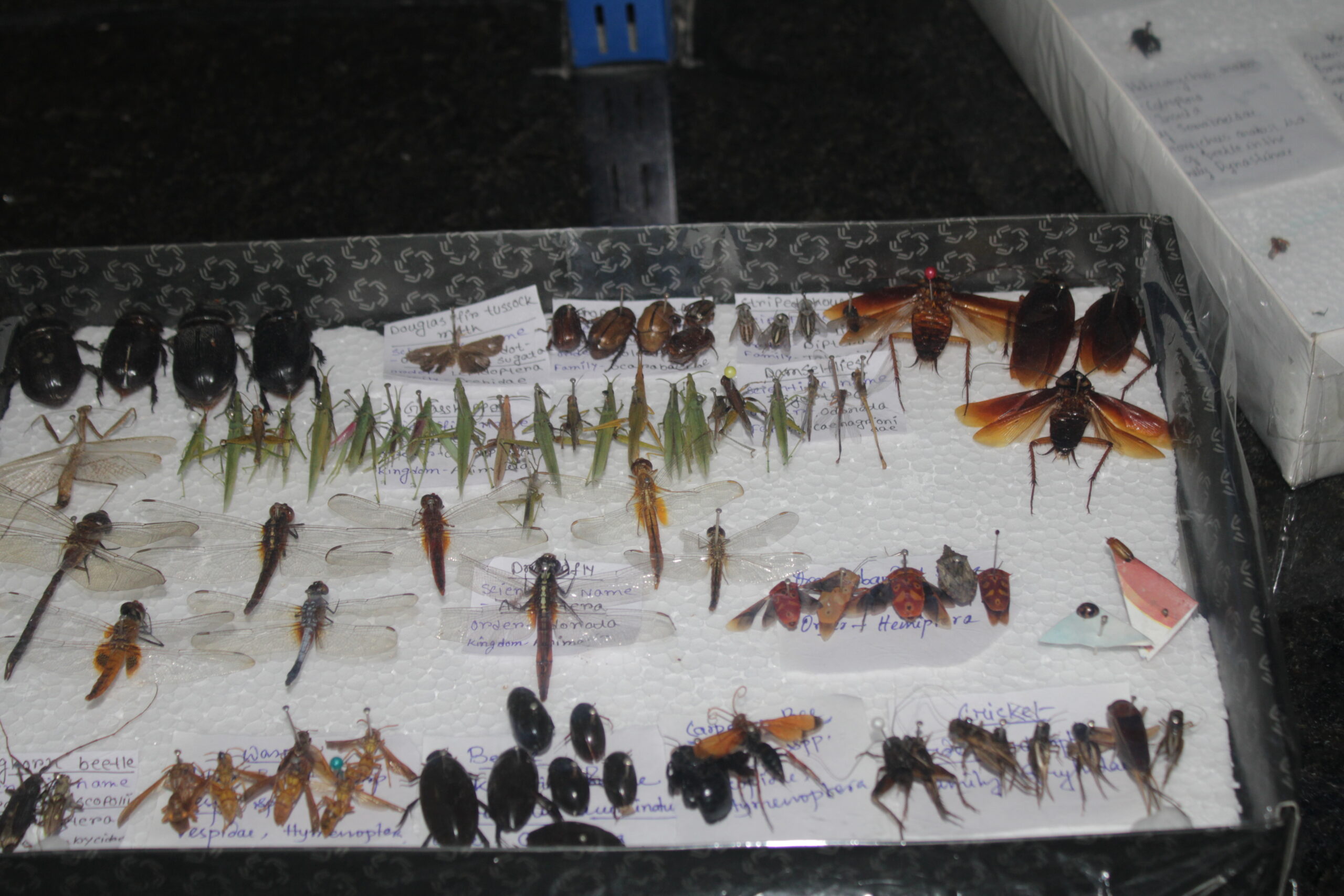
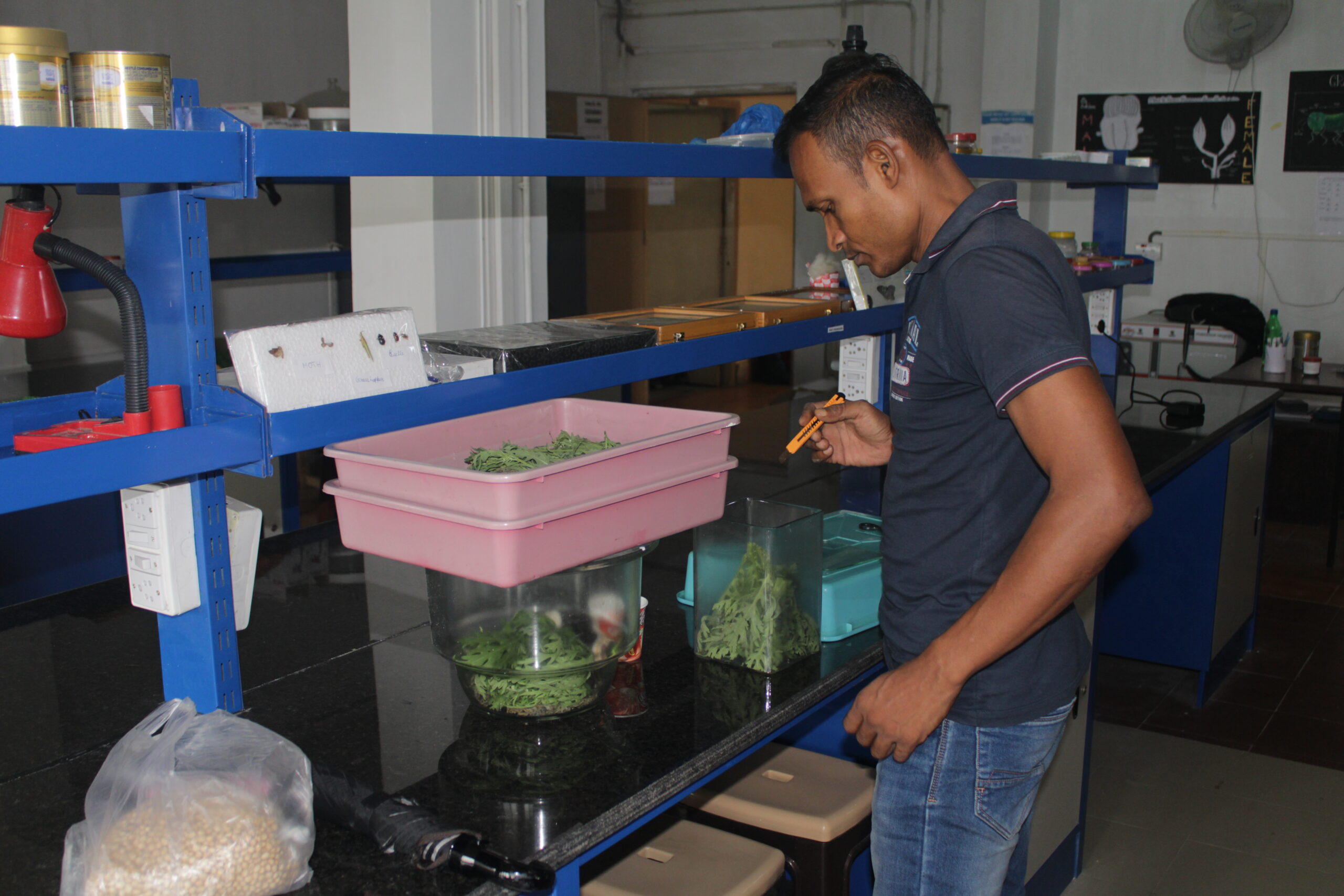
    The Neotia University (TNU) is the First Private University in W.B. to offer ICAR-accredited B.Sc. (Hons.) Agriculture 4-years course. Sixty-acre campus with poly house, net house, aquaponics unit, meteorological observatory, and developed experimental field & labs (agronomy, soil science, horticulture, genetics & plant breeding, entomology, agriculture extension, agriculture engineering, etc.) to conduct live projects and research opportunities to students. The University follows a strict ICAR course curriculum along with well-maintained laboratories, equipment and course-wise practical manuals as a part of quality education. The curriculum is based on experiential learning through rural agriculture work, internship programs, industrial training, and live projects. The farm workshop is well equipped with a tractor, power tiller, and equipment required for mechanized farming and conducting practical classes. The Agriculture unit has started construction/development of plant tissue culture unit, plant pathology lab, food science lab, agri-biotech lab, geo-informatics & precision agriculture lab, mushroom unit, sericulture unit, crop cafeteria, farmers meeting point, mulberry garden, vegetable garden, floriculture garden, indigenous & exotic fruit orchards, land shaping models, field laboratory, biogas plant, compost & vermicompost unit, open & covered threshing floor, etc.

    Read More

    Eligibility Criteria

    12th standard pass with Physics, Chemistry, Biology / Maths/ Or, Physics+Chemistry with any 2 vocational subjects related with Agriculture / Horticulture with at least 55% marks.

    Top Recruiters, Highest Salary

    20 Companies

    Campus Recruitment for B.Sc. in Agriculture

    100%

    Placement Assistance

    2.62 Lakhs / Annum

    Average Salary Received

    9.0 Lakhs / Annum

    Highest Salary Received

    100%

    Internship

    19 Companies

    Offered for Internship

    Curriculum / Syllabus

    • Semester 1
    • Semester 2
    • Semester 3
    • Semester 4
    • Semester 5
    • Semester 6
    • Semester 7
    • Semester 8

    Semester 1: (First Year) Curriculum Branch / Course: Agriculture

    Sl NoType of CourseCourse CodeCourse titleHours per weekCredits
    LecturePractical
    1Non-Gradial CoursesNG-AG 101Introduction-cum-Foundation course (Deeksha Arambh)04 (For 2 Weeks)2(0+2)*
    2Skill Enhancement CoursesSE-HORT 101Horticulture Nursery Management042(0+2)
    3Skill Enhancement CoursesSE-AGR 102Agriculture Waste Management042(0+2)
    4Ability Enhancement CoursesAE-EXT 101Communication Skills122(1+1)
    5Multi-disciplinary CoursesMD-AGR 101Farming-based livelihood systems223(2+1)
    6Core CoursesCC-EXT 101Rural Sociology and Educational Psychology202(2+0)
    7Core CoursesCC-AGR 102Fundamentals of Agronomy223(2+1)
    8Core CoursesCC-SSAC 103Fundamentals of Soil Science223(2+1)
    9Core CoursesCC-HORT 104Fundamentals of Horticulture223(2+1)
    10Ability Enhancement CoursesAE-PHYE 102NCC/NSS021(0+1)
    11Non-Gradial CoursesNG-AECS 102/NG-BCP 102Introductory Mathematics/Introductory Biology (need-based)101(1+0)*
    No. of hours36
    Total Credits21(11+10)+3*

    Semester 2: (First Year) Curriculum Branch / Course: Agriculture

    Sl NoType of CourseCourse CodeCourse titleHours per weekCredits
    LecturePractical
    1Skill Enhancement CoursesSE-GPB 203Seed Production Technology042(0+2)
    2Skill Enhancement CoursesSE-ENTO 204Beneficial Insect Farming042(0+2)
    3Ability Enhancement CoursesAE-EXT 202Personality Development122(1+1)
    4Value Added CoursesVA-SSAC 201Environmental Studies and Disaster Management223(2+1)
    5Core CoursesCC-SSAC 205Soil Fertility Management223(2+1)
    6Core CoursesCC-ENTO 206Fundamentals of Entomology223(2+1)
    7Core CoursesCC-ASC 207Livestock and Poultry Management122(1+1)
    8Core CoursesCC-PPA 208Fundamentals of Plant Pathology223(2+1)
    9Ability Enhancement CoursesAE-PHYE 203NSS-II/NCC-II021(0+1)
    No. of hours32
    Total Credits21(10+11)

    Semester 3: (Second Year) Curriculum Branch / Course: Agriculture

    Sl NoType of CourseCourse CodeCourse titleHours per weekCredits
    LecturePractical
    1Skill Enhancement CoursesSE-PPA 305Mushroom Production Technology042(0+2)
    2Multi-disciplinary CoursesMD-AECS 302Entrepreneurship Development and Business Communication223(2+1)
    3Ability Enhancement CoursesAE-PHYE 303Physical Education, First Aid and Yoga Practices042(0+2)
    4Core CoursesCC-GPB 309Principles of Genetics223(2+1)
    5Core CoursesCC-AGR 310Crop Production Technology-I (Kharif crops)223(2+1)
    6Core CoursesCC-HORT 311Production Technology of Fruits and Plantation Crops122(1+1)
    7Core CoursesCC-EXT 312Fundamentals of Extension Education122(1+1)
    8Core CoursesCC-ENTO 313Fundamentals of Nematology122(1+1)
    9Core CoursesCC-AGR 314Principles and Practices of Natural Farming122(1+1)
    No. of hours32
    Total Credits21(10+11)

    Semester 4: (Second Year) Curriculum Branch / Course: Agriculture

    Sl NoType of CourseCourse CodeCourse titleHours per weekCredits
    LecturePractical
    1Skill Enhancement CoursesSE-SSAC 406Soil, Plant & Water Testing042(0+2)
    2Value Added CoursesVA-AECS 402Agricultural Informatics and Artificial Intelligence223(2+1)
    3Core CoursesCC-HORT 415Production Technology of Vegetables and Spices122(1+1)
    4Core CoursesCC-AECS 416Principles of Agricultural Economics and Farm Management202(2+0)
    5Core CoursesCC-AGR 417Crop Production Technology-II (Rabi Crops)223(2+1)
    6Core CoursesCC-AE 418Farm Machinery and Power122(1+1)
    7Core CoursesCC-AGR 419Water Management122(1+1)
    8Core CoursesCC-SSAC 420Problematic Sols and their management122(1+1)
    9Core CoursesCC-GPB 421Basics of Plant Breeding223(2+1)
    No. of hours30
    Total Credits21(12+9)

    Semester 5: (Third Year) Curriculum Branch / Course: Agriculture

    Sl NoType of CourseCourse CodeCourse titleHours per weekCredits
    LecturePractical
    1Skill Enhancement CoursesSE-SSAC 406Soil, Plant & Water Testing042(0+2)
    2Value Added CoursesVA-AECS 402Agricultural Informatics and Artificial Intelligence223(2+1)
    3Core CoursesCC-HORT 415Production Technology of Vegetables and Spices122(1+1)
    4Core CoursesCC-AECS 416Principles of Agricultural Economics and Farm Management202(2+0)
    5Core CoursesCC-AGR 417Crop Production Technology-II (Rabi Crops)223(2+1)
    6Core CoursesCC-AE 418Farm Machinery and Power122(1+1)
    7Core CoursesCC-AGR 419Water Management122(1+1)
    8Core CoursesCC-SSAC 420Problematic Sols and their management122(1+1)
    9Core CoursesCC-GPB 421Basics of Plant Breeding223(2+1)
    No. of hours30
    Total Credits21(12+9)

    Semester 6: (Third Year) Curriculum Branch / Course: Agriculture

    Sl NoType of CourseCourse CodeCourse titleHours per weekCredits
    LecturePractical
    1Multi-disciplinary CoursesMD-AECS 503Agricultural Marketing and Trade223(2+1)
    2Core CoursesCC-SSAC 522Introduction to Agro-meteorology122(1+1)
    3Core CoursesCC-BCP 523Fundamentals of Crop Physiology223(2+1)
    4Core CoursesCC-ENTO 524Pest management in Crops and Stored Grains223(2+1)
    5Core CoursesCC-PPA 525Diseases of Field & Horticultural Crops & their Management223(2+1)
    6Core CoursesCC-GPB 526Crop Improvement-I (Kharif Crops)122(1+1)
    7Core CoursesCC-AGR 527Weed Management122(1+1)
    8Core CoursesCC-HORT 528Ornamental Crops, MAPs and Landscaping122(1+1)
    9Core CoursesCC-AGR 529Introductory Agroforestry122(1+1)
    10Non-Gradial CoursesNG-ST-503Study Tour (10–14 Days)042(0+2)*
    No. of hours35
    Total Credits22(13+9)+2*

    Semester 7: (Fourth Year) Curriculum Branch / Course: Agriculture

    Sl NoType of CourseCourse CodeCourse titleHours per weekCredits
    LecturePractical
    1Elective CourseEC-AECS 701Agri-Business Management*324(3+1)
    2Elective CourseEC-EXT 702Agricultural Journalism*324(3+1)
    3Elective CourseEC-HORT 703Food safety and standards*324(3+1)
    4Elective CourseEC-AE 704Protected cultivation*324(3+1)
    5Elective CourseEC-AGR 705Climate Resilient Agriculture*324(3+1)
    6Elective CourseEC-GPB 706Biotechnology of Crop Improvement*324(3+1)
    7Elective CourseEC-AECS 707Geoinformatics and Remote Sensing, precision farming*324(3+1)
    8Elective CourseEC-BCP 708Micro-propagation Technologies*324(3+1)
    9Elective CourseEC-HORT 709Food Science and Nutrition*324(3+1)
    10Elective CourseEC-HORT 710Post Harvest Technology and Value Addition*324(3+1)
    11Elective CourseEC-SSAC 711Management of natural resources324(3+1)
    12Elective CourseEC-SSAC 712Agrochemicals324(3+1)
    13Elective CourseEC-HORT 713Landscaping324(3+1)
    14Elective CourseEC-GPB 714Commercial Plant Breeding324(3+1)
    15Elective CourseEC-SSAC 715Bioformulation and Nanoformulation324(3+1)
    16Elective CourseEC-SSAC 716Biopesticides and Biofertilizers324(3+1)
    17Elective CourseEC-AECS 717System Simulation and Agroadvisory324(3+1)
    18Elective CourseEC-HORT 718Hi-tech Horticulture324(3+1)
    19Elective CourseEC-GPB 719Commercial Seed Production324(3+1)
    20Elective CourseEC-AGR 720Principles and Practices of Organic Farming/Conservation Agriculture324(3+1)
    No. of hours25
    Total Credits20 (15+5)

    Semester 8: (Fourth Year) Curriculum Branch / Course: Agriculture

    Sl NoType of CourseCourse CodeCourse titleNumber of weeksCredits
    1Student READY (RAWE/Experiential Learning/Hands-on Training/Industrial Attachment/Project Work/Internship)RAWE & AIA 801RAWE & AIA [Rural Agricultural Work Experience and Agro-industrial Attachment]2020(0+20)
    Sl. No.ActivitiesNo. of weeksCredit
    1General orientation & On-campus training by different faculties115
    2Village attachment8
    3Unit attachment in Univ./ College. KVK/ Research Station/Plant Clinic Attachment6
    4Agro-Industrial Attachment305
    5Project Report Preparation, Presentation, and Evaluation2
    Total weeks for RAWE & AIA2020(0+20)

    ONLINE COURSES DETAILS

    The students will have to take a minimum of 10 credits of online courses (as per UGC guidelines for online courses) as a partial requirement for the B. Sc. (Hons) Agriculture. The details of the online courses are given below. It is mandatory for each student to take prior approval of the courses they opt for from the Dean, SAAS and submit certificate for the same upon completion of the said online course.

    Online SWAYAM Courses for UG Students

    Sl. No.Course TitleSubject / DisciplineCourse Coordinator NameHost University/InstituteLevel UG/PGNCrF LevelDuration in weeksCreditsInstruction Language
    1Personality DevelopmentManagementDr. Sweta Sanjog MethaSavitribai Phule Pune University, PuneUG5.584English
    2EntrepreneurshipManagementProf. C Bhaktavatsala RaoIIT MadrasUG/PG4.5 – 8124English
    3Remote Sensing and GISMultidisciplinaryProf. Rishikesh Bharti IIT GuwahatiUG/PG4.5 – 882English
    4Ecology and Environmental PollutionEnvironmental StudiesProf. Zafar A. ReshiUniversity of KashmirUG4124English
    5Micro Irrigation EngineeringAgriculture and Food EngineeringProf. Kamlesh Narayan TiwariIIT KharagpurUG/PG4.5 – 8123English
    6Soft Skill DevelopmentHumanities and Social SciencesProf. Priyadarshi Patnaik,

    Prof. V. N. Giri,

    Prof. D. Suar

    IIT KharagpurUG/PG4.5-882English
    7Basic Statistics using R (BlueSky Statistics)MultidisciplinaryProf. Harsh PradhanBanaras Hindu UniversityUG/PG4.5-882English
    8Body Language: Key To Professional SuccessHumanities and Social SciencesProf. Rashmi GaurIIT RoorkeeUG/PG4.5-841English
    9Climate Risk, Adaptation and Sustainable DevelopmentMultidisciplinaryProf. MD BeheraIIT KharagpurUG/PG4.5-8123English
    10Genetic Engineering: Theory and ApplicationBiological Sciences & Bioengineering Prof. Vishal Trivedi  IIT GuwahatiUG/PG4.5-8123English

    Lab Setup

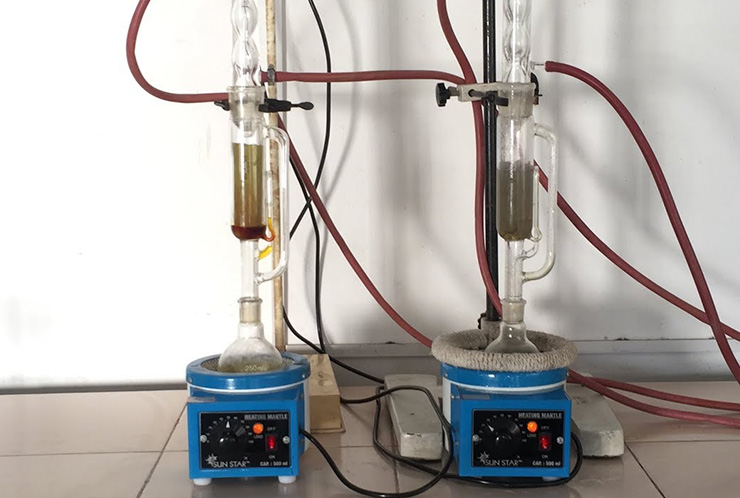
    Soxhlet extraction is used when the desired compound has a limited solubility in a solvent, and the impurity is insoluble in that solvent. It allows for unmonitored and unmanaged operation while efficiently recycling a small amount of solvent to dissolve a larger amount of material.

    For More Details

    Program Educational Objective

    PROGRAMME OBJECTIVES

    1. The programme builds students to analyze complex problems with scientific understanding and apply learned skills to make agriculture grow and profitable.
    2. The programme aims to produce graduates with high levels of professionalism, technical competency, strong ethical responsibility, and commitment towards solving challenging societal tasks.
    3. Graduates of the program will reveal lifelong learning and teamwork in their profession.

    PO 1: Agriculture knowledge: Apply the knowledge of agriculture production with a conservation and sustainability approach to food and farming systems.

    PO 2: Complex agricultural problems analysis: Understand rapid appraisal of agricultural innovation that can guide the analysis of complex agricultural problems.

    PO 3: Modern tool usage: Proficient in application of ICT (Information and Communication Technologies), modern tools like IoT (Internet of Things), drones, automation, GIS, remote sensing and digital farming for achieving the goals of production efficiency and conservation of resources.

    PO 4: The Agriculturist and Society: Learn social science concepts and skills to understand, analyze and communicate complex ideas, information and data related to agricultural systems.

    PO 5: Environment and sustainability: Understand the need for sustainable agriculture development and help society in ensuring food security on long term basis.

    PO 6: Ethics: Apply ethical principles and commit to professional ethics associated with the food system – farming, resource management, food processing, distribution, trade and consumption.

    PO 7: Individual and teamwork: Function and contribute effectively as an individual and as a member of team.

    PO 8: Communication: Communicate effectively with farming communities and team members, comprehend and write reports, documents, prepare and deliver presentations, and give or receive clear instructions.

    PO 9: Project management and finance: Demonstrate knowledge and understanding of the agriculture ecosystem and agribusiness management principles and apply these for preparing bankable detailed project report for financing.

    PO 10: Entrepreneurship and employability: Able to plan and run new business and create job opportunities for others.  Also with adequate knowledge, skills, and personal attitudes become successful in the required roles.

    PO 11: Life-long learning: Recognize the need for life-long learning and thus become successful as a professional.

    PROGRAMME SPECIFIC OUTCOMES:

    PSO1: Production technology of various crops, organic farming, precision farming, climate-smart agriculture, issuing crop advisory, soil sample collection, testing, fertilizer recommendation, use of beneficial soil-microbes.

    PSO2: Production of horticultural crops, landscaping, raising plantations & agro-forestry, protected agriculture and learning techniques of hydroponic, vertical farming, roof-top gardening, tissue culture.

    PSO3: Basics of farm-machineries, their application, idea about different land shaping models, operation, design and structural details.

    PSO4: Studies on floral and cell biology, application of classical and advanced genetic techniques in germplasm management, varietal development following selection, hybridization, seeds production and testing, and enumeration of commercial breeding models.

    PSO5: Understanding pest and disease infestation including IPDM, bio-control, mushroom, honey and silk production.

    PSO6: Technology transfer, on-farm demonstration, acquiring farmers’ problem-solving skill, innovation, value addition, finance and marketing, farm management and entrepreneurship development, data analysis, application of statistics in agriculture, information technology in agriculture and precision farming using modern technologies.

    PSO7: Knowledge of animal science, food science, nutrition, and quality including animal origin foods.

    Fee Structure

    Courses Offered
    (2 semesters per year)
    Fee Per Semester (A) (Rs.)One Time Fee (B) (Rs.)1st Semester Fee (A+B) (Rs.)Total Course Fee (Rs.)7th & 8th Semester – Exam Fee for OJT/RW (Rs.)
    B.Sc. (Hons.) Agriculture71,00029,0001,00,0005,97,000

    Modes of Payment

    ‘The Neotia University’

    Bank of Baroda
    A/C No. 6595020000033
    IFSC Code : BARB0VJOKOL
    Branch : SME Branch, Kolkata-700001


    Students can make the payment of Fee by following modes

    • 1. Demand Draft in the name of
      The Neotia University
    • 2. Cheque in the name of
      The Neotia University
    • 3. Online Payment of
      The Neotia University website

    Scholarships

    Scholarship / Sponsorship Criteria for India, Nepal, Bhutan & Bangladesh Students Admission
    for the Session 2026-27 at THE NEOTIA UNIVERSITY (TNU), W.B. for UG and Lateral Entry Courses
    SL NO.TYPE OF SCHOLARSHIPCLASS XII % or Equivalent %TERMS AND CONDITIONSPERCENTAGE (%) OF SCHOLARSHIP ON TUITION FEE
    1CHANCELLOR’S SCHOLARSHIPi) Yearly Family income should be less than 2.5 Lakhs
    ii) Interview and document verification will be done by an empowered committee
    50% TO 100%
    2GRAMOTTHAN SCHOLARSHIP
    (Students from Gram Panchayat area of South 24 Parganas)
    >= 65%Yearly Family Income less than 5.0 Lakhs**25%
    3SPECIAL HILL STUDENTS’ SCHOLARSHIP
    [Students from GTA Area (W.B), North-East States, Andaman and Nicobar Islands, Nepal & Bhutan]
    >= 65%Yearly Family Income less than 5.0 Lakhs**25%
    4SAHODARYA SCHOLARSHIP
    (Siblings of all students – present or passed out)
    >= 60%ANY25%
    5MERE APNE SCHOLARSHIP
    (For Ambuja Neotia Group employees – in memory of Late Vinod Kumar Neotia)
    >= 60%Yearly Family Income less than 5.0 Lakhs**25%
    6SPORTS SCHOLARSHIP>= 60%STATE / NATIONAL LEVEL PARTICIPANT / CHAMPION25%
    7CULTURAL SCHOLARSHIP>= 60%STATE / NATIONAL LEVEL PARTICIPANT / CHAMPION25%

    Residential Facilities

    The University is equipped with avant-garde Infrastructure. We offer a rather impressive array of facilities viz smart classrooms, modern laboratories, conference and seminar halls, Wi-Fi enabled campus, a high-tech Learning Resource Centre, state-of-the-art IT Centre, clean and airy student residences, mess serving wholesome meals, indoor and outdoor sport facilities including a plush new gymnasium with latest equipments. Campus Banking Facilities, Doctor-on-call and Hospital Linkages are also available to enhance the student’s convenience.

    icon

    Dining and Housing

    Read More
    icon

    Swimming Pool

    Read More
    icon

    Gymnasium

    Read More
    icon

    Health and Wellbeing

    Read More
    icon

    Ragging Free Campus

    Read More

    How to Apply

    Step 1

    Sign up /Fill up the Application Form

    Step 2

    Appear for Admission Entrance Test

    Step 3

    Test Results

    Step 4

    Provisional Admission

    Step 5

    Final Admission

    Step 1:

    Sign up /Fill up the Application Form

    The student must first complete the Registration/Enquiry Form via the TNU website (www.tnu.in) or any other online platform that provides access to the TNU Registration/Enquiry link. Upon submitting the Registration Form, the student will receive a link via email, SMS, or WhatsApp to complete the Application Form. The Admission Counsellor at TNU will assist in filling out the form. Upon submission, a unique application number will be assigned to the student.

    Step 2:

    Appear for Admission Entrance Test

    All undergraduate course applicants are required to take an admission entrance examination. Once the Application Form is submitted, the Admission Test option will become available on the Student Dashboard. By selecting this link, students can complete the test at their convenience from any location. Students applying for lateral entry into postgraduate courses are exempt from this test. A distinct admission test will be organized for PhD candidates.

    Step 3:

    Test Results

    Within 24 hrs. of Admisison Test, the test results will be available at student’s Dashboard. 40% is the qualifying marks for the test.

    Step 4:

    Provisional Admission

    Following the submission of the Application Form, if the student successfully passes the entrance examination, they may secure provisional admission in their chosen and available course by remitting a fee of Rs.10,000/-. The payment procedure and link are provided above. Upon completion of the payment via TNU’s Payment Gateway, a receipt will be generated and can be accessed on the student’s Dashboard.

    Step 5:

    Final Admission

    After students receive their H.S (10+2) marks and meet TNU’s eligibility requirements for a specific course, they may secure final admission by remitting the outstanding balance of the first semester fee. Once the final admission fee is paid, a UID number will be generated for the student, allowing them to attend classes. The provisional start date for classes is set for August 1, 2025.

    Apply Now

    Important Dates

    Online Registration Starts FromStarted from January 2026
    Provisional AdmissionStarted from January 2026
    Entrance Examination DateMarch 2026 to July 2026
    Declare of Test ResultsWithin 24 hours of appearing the test
    Last date of Admission15th Oct 2026.

    *The final date for Admissions will be as per UGC Guidelines.


    FAQs

    What is the qualifying criteria to take admission?

    In class 12 student need to secure 55% marks in Physics + Chemistry + Biology/Math or Physics + chemistry with any 2 vocational subjects related with Agriculture/Horticulture.

    Yes, University has their own entrance exam.

    Admission fees-29000/- + Semester fees-71000/-

    No other fees required.

    UGC approval and ICAR accreditation required. Yes, TNU have both the approval.

    University have currently 35 Professors in this course.

    Yes. Please check Scholarship eligibility criteria

    Yes, Student will get placement support.

    Student need to get filled up online application form(Under Graduate form) by paying Rs.500/-

    Yes, student get placement after this course.

    Enquiry Now Enquiry Now
    Enquire Now Enquire Now Apply Now
    Download Brochure